I have been an academic in art history for thirty-five years and have read just about every book in my narrow subspecialty or assigned as a course reading for a class I was teaching. During CoViD I began pulling off the shelf of my home library (let’s not go into how many books I own) volumes and started peeking at sections. Books I bought to read someday, stuff I thought I should own, titles so damn cheap (in my view) when I encountered them on remainder tables I couldn’t honestly not buy them.
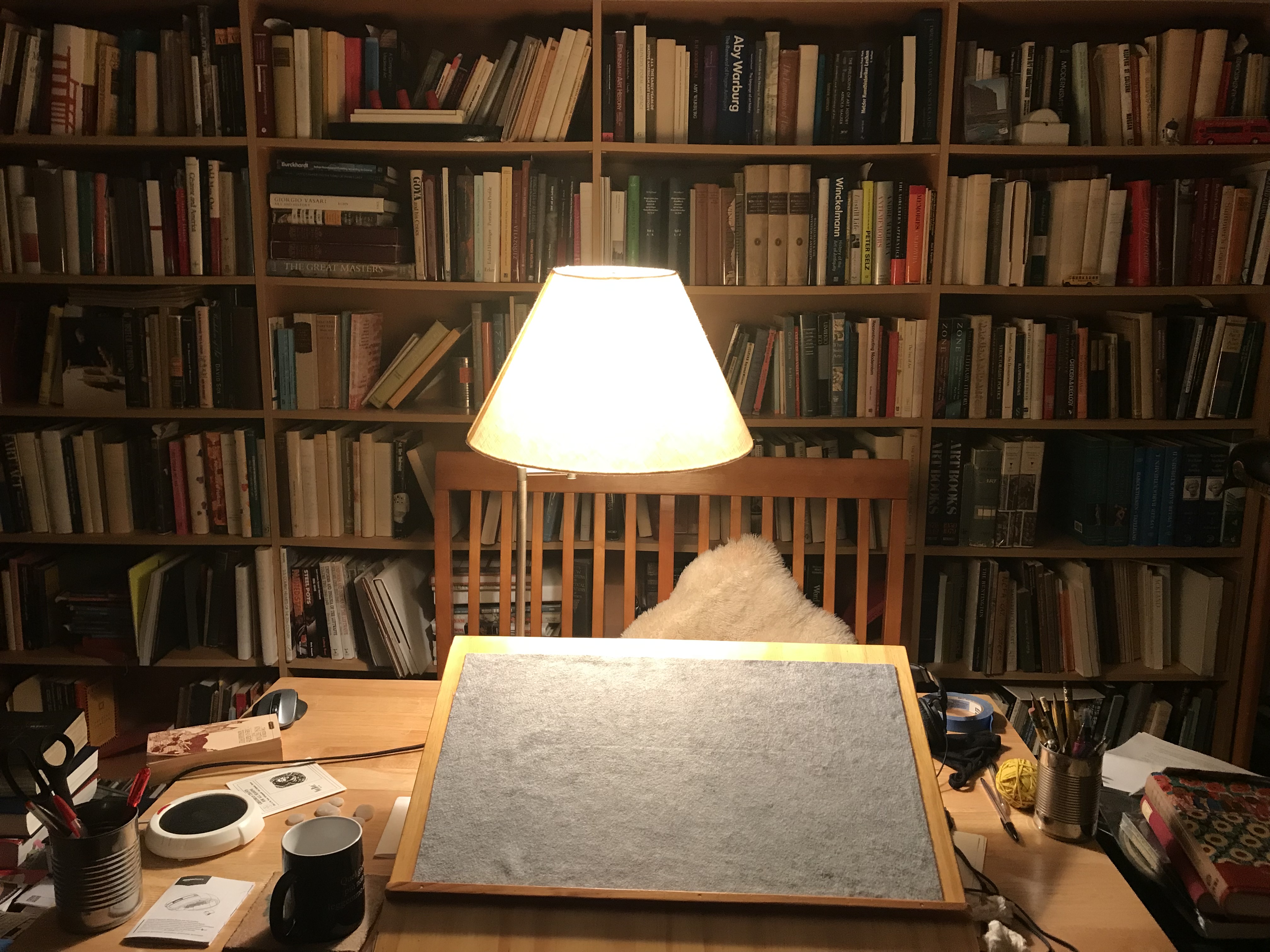
And so it goes. Or went.
To my surprise, I found that texts I once considered turgid were elegant. Prose I thought (or had heard) was tortured in fact thoughtful and clear. The names of the great art history writers, their singular subjects, their way of framing a question, spoke to me anew. I found myself making reading lists within reading lists, spending time touching the printed words on the paper page (art history is a tactile pursuit, even when the touching is virtual).
Winston Churchill famously said (a lot of things, actually, but once said), “Whenever a new book comes out one should read an old one.” Not that new research or ways of thinking are always derivative, but newer tomes necessarily build on what’s been published before. It’s a conversation that only the reader of both titles will ever hear. Voices of Silence.
Of course this kind of reading is treacherous. We always blame the author or the book for our interpretive wanderings. “Galeotto fu il libro e chi lo scrisse,” Francesca complains to Dante. Dipping into too many books and passages too briefly to appreciate the whole work leaves one with nothing but sherds. Much of that could be said for university education today as well.
My comments here will necessarily be ephemeral. It’s the little things about reading in art history that strike me as worthwhile. There’s plenty of reviews and opinions on the books I choose to read here. It’s the odd thoughts well-researched books provide that interests me, that I write about here.
So, gentle reader, accompany me while I read or re-read kunstgeschichtliche bücher. Accompany me while I discover a well-established book–much the way early white explorers discovered new lands known for centuries by their inhabitants. Books well known and those fading in the noise of the internet and the soundbite. My very personal reactions to books. To everyone who still has an attention span and the love of acid-free paper pulp, get yourself a cup of coffee and tell me what you thought of the book I just encountered. Or what you encountered.
 Reading Art History